To translate resume to spanish well, map every job title to an ESCO occupation term first, then rebuild the layout for the target country: photo, national ID line, DD/MM dates and Spanish section labels.

Fact level: confirmed specs, reported figures, undisclosed norms
Resume advice for Spanish-speaking markets blends three very different kinds of claim, and mixing them is how people end up rewriting a CV around a rumor. Sort each claim before you act on it.
Confirmed — official EU documentation
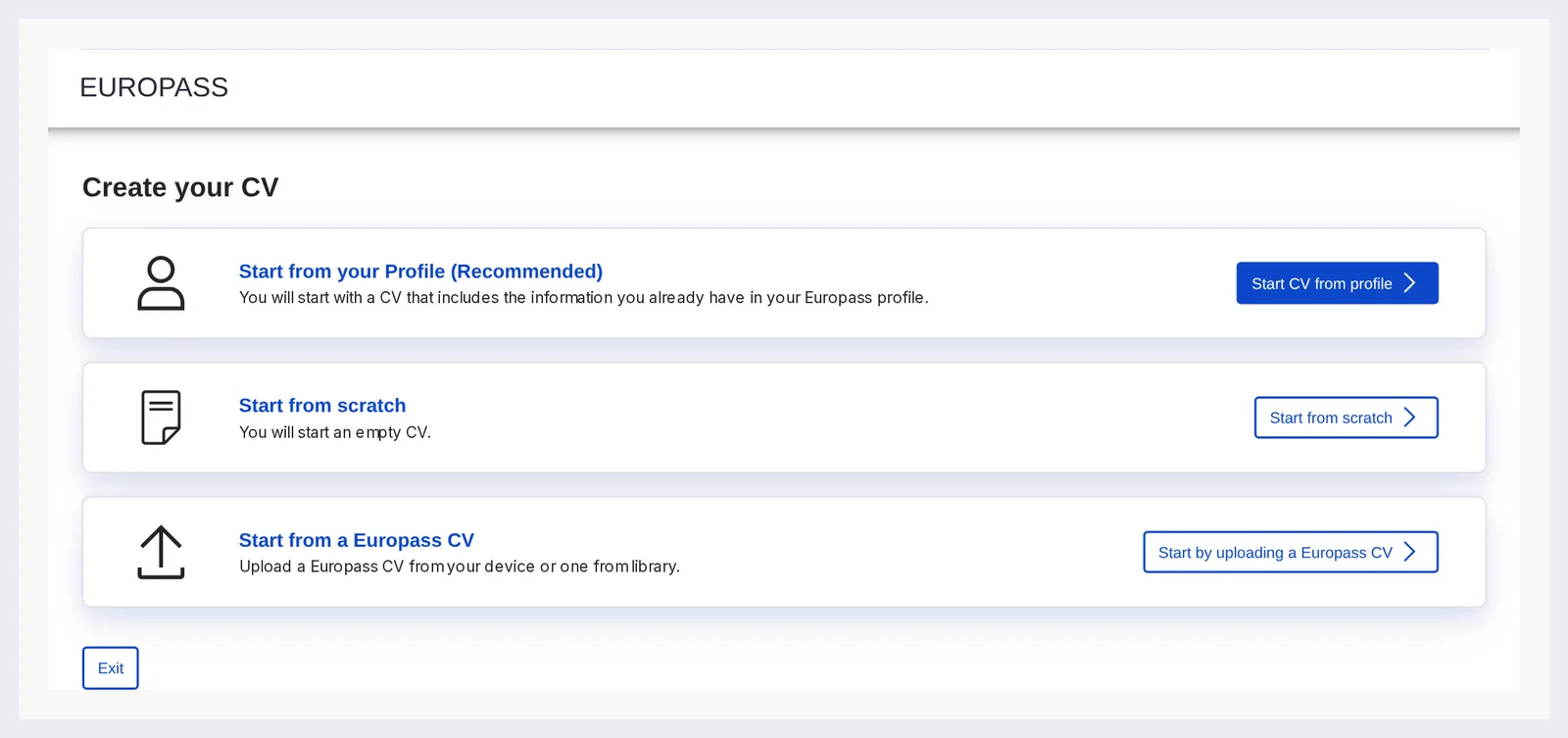
- The European Commission’s official Europass CV builder lets job seekers create, store and share the same CV in 31 languages, including Spanish, so an English CV can be reissued in a Spanish-language version without rebuilding it.
- Europass publishes exact file specifications for re-uploading an existing CV, covered further down.
Reported — platform figures from the publisher
- As of the European Commission’s July 2025 announcement, Europass had over 8.5 million registered users and was available in 31 languages.
Not disclosed — country hiring norms
- No public register certifies what a recruiter in Madrid, Bogotá or Monterrey wants to see on page one.
That last tier is where most blog posts overreach. Photo or no photo, one page or two, ID number or none: these are hiring conventions that shift by country, sector and company size, and nobody publishes them as a rule. Treat them as patterns you verify against real job postings in your target city, not as laws.
The practical consequence is simple. Spend your certainty on the things that are documented — the occupation vocabulary and the file specs — and spend your judgment on the rest.
Background: what a currículum vítae is expected to look like
The document has different names depending on where you send it, and using the wrong one marks you as an outsider before anyone reads your experience.
| Region | Usual name on the document |
|---|---|
| Spain | Currículum vítae (CV) |
| Mexico, Chile, Argentina, Peru | Currículum vítae / CV |
| Colombia, Venezuela, Ecuador | Hoja de vida |
| Dominican Republic, Panama | Currículum / hoja de vida |
The structural expectation also differs from a US resume. A Spanish-language CV commonly opens with a personal-data block (datos personales), then education and experience under headings like Formación académica and Experiencia laboral, and closes with Idiomas and Competencias. Americans trained to lead with a summary and bullet-point achievements often keep that order and drop the personal block entirely, which reads as an incomplete form rather than a lean resume.
Europass’s own CV guidance tells applicants to include a professional photograph and a professional email address — a formatting norm common in Spain and Latin America but actively discouraged on US resumes. The photo question alone changes the whole top third of the page. If you are applying across several countries, read up on how Spanish varies between Colombia and other markets before you settle on one wording for everything.
The problem: English job titles that break in literal translation
Titles carry rank, scope and legal meaning, and those three things rarely survive a word-for-word swap. The failures are predictable.
| English title | Literal trap | What usually fits better |
|---|---|---|
| Manager | "Mánager" reads as an agent or sports coach | Gerente, director, responsable de, jefe de — chosen by actual scope |
| Associate | "Asociado" suggests a partner or shareholder | Analista, consultor júnior, especialista |
| Officer | "Oficial" suggests military or police rank | Director de… for C-level, responsable de… otherwise |
| Intern | "Interno" means an inpatient or a boarding student | Becario (Spain), pasante or practicante (much of Latin America) |
| Executive | "Ejecutivo" can imply senior leadership | Ejecutivo de ventas works; ejecutivo alone overstates |
Each ESCO occupation carries one preferred term plus a varying set of non-preferred and hidden terms across the 28 ESCO languages, which is exactly why one English job title can legitimately map to several acceptable Spanish wordings. There is no single right answer, only a right answer for that country and that scope.
Two habits help. Check how the title appears in real job ads in the target country, and cross-check phrasing in a bilingual corpus rather than a single dictionary entry — the comparison of Linguee against other translation tools explains what each type of tool is good at.
The problem, part two: format mismatches by country
A perfectly translated CV still gets filtered out when the layout signals "foreign applicant who didn’t check." These are the elements that trip US applicants most often.
| Element | US resume habit | Common expectation in Spain / Latin America |
|---|---|---|
| Photograph | Omitted on purpose | Frequently included, head-and-shoulders, neutral background |
| National ID | Never included | DNI/NIE in Spain, CURP or RFC in Mexico, cédula in Colombia, DNI in Peru |
| Date order | 03/09/2026 = March 9 | 03/09/2026 = 3 September |
| Section labels | Experience, Education, Skills | Experiencia laboral, Formación académica, Competencias |
| Length | One page, strictly | Two pages is routinely acceptable |
| Contact line | City and state | City, country and a local-format phone number |
Never copy a US Social Security number into the ID field. The national identifier a Spanish or Mexican employer expects is a civil registry number used for payroll and contracts, and if you do not hold one yet, leaving the line out is better than inventing a substitute.
Date order deserves one more line of attention because it quietly corrupts your work history. A role listed as 06/07/2024–09/11/2025 in US order becomes a different employment period for a reader in Bogotá. Write months as words — jun. 2024 – nov. 2025 — and the ambiguity disappears. Deciding between a Spain-facing and a region-neutral version is the same judgment covered in when to choose Latin American Spanish (es-419).

The solution: anchor every job title to ESCO before you write
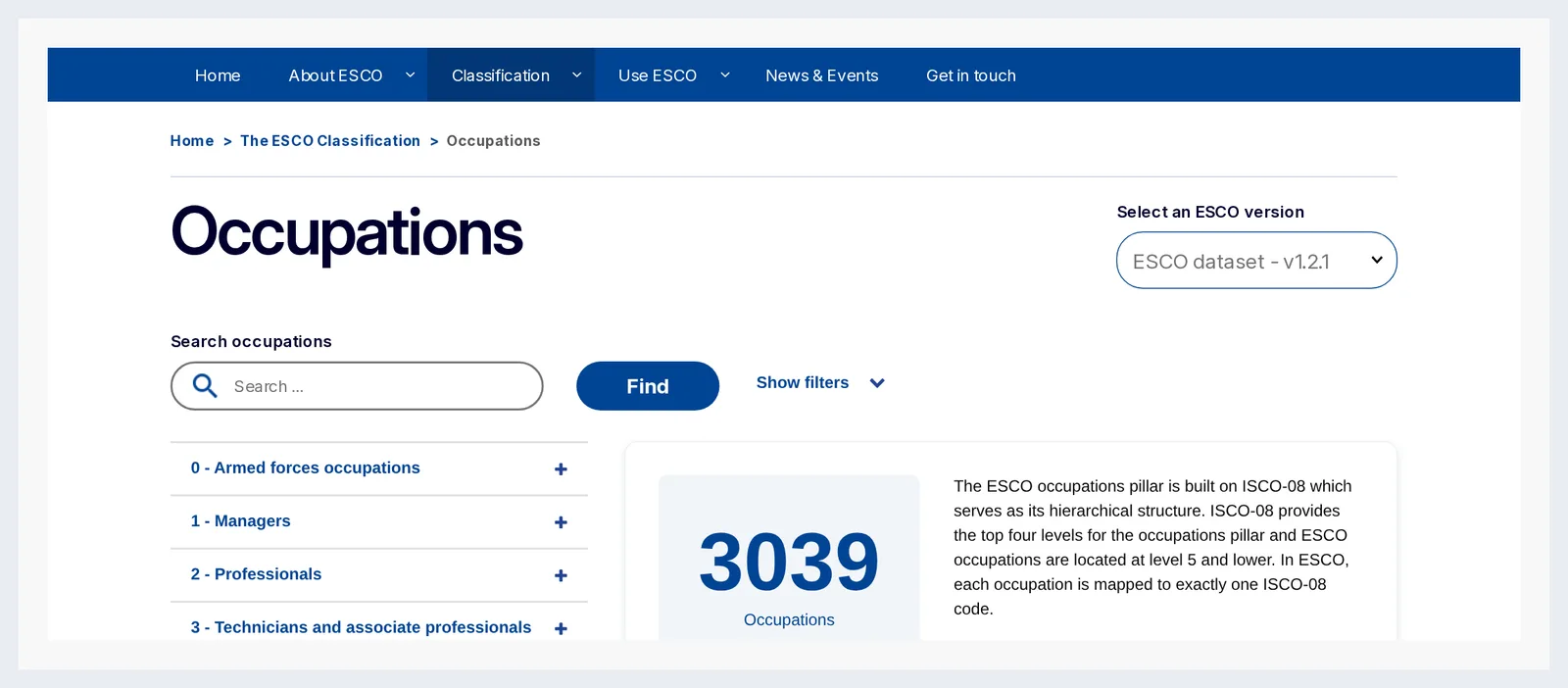
Fix the vocabulary before you touch the prose. ESCO is the European Commission’s multilingual classification of occupations and skills, and it exists precisely so the same job can be named consistently across languages.
The Commission’s own ESCO documentation states that ESCO v1.2 is available in 28 languages. That means you can look up your English job title, open its occupation record, and read the Spanish preferred term alongside the non-preferred terms recorded for the same occupation — a set of defensible options rather than one guess.
Work through each role on your CV with these checks:
- Find the occupation, not the title. Search by what you actually did; the English title on your badge may map to a differently named occupation.
- Take the preferred Spanish term as your default. It is the one a classification-aware recruiter or parsing system is most likely to recognize.
- Compare the non-preferred terms against live job ads in the target country, and pick the local hiring word when the two disagree.
- If the preferred term sounds too senior for what you did, name the function instead of the rank and add a scope line (team size, budget, region).
- If your title has no ESCO entry at all, use the nearest occupation term and describe the scope in one sentence underneath.
Keep a two-column mapping file as you go: English title on the left, chosen Spanish wording plus the reason on the right. When a recruiter asks why your title changed between your LinkedIn profile and your CV, you have an answer.
The solution in context: Europass, machine translation and certified translation
Three routes exist, and they solve different problems.
| Route | Best for | Main limit |
|---|---|---|
| Europass CV builder | Producing a structured Spanish-language version in an EU-recognized layout | Fixed structure; you still choose the wording |
| Machine translation | Fast first drafts of descriptive bullet points | Titles, acronyms and degree names need human review |
| Certified or sworn human translation | Diplomas, transcripts and official records | Cost and turnaround; requirements vary by country |
The European Commission’s Europass CV builder lets you create, store and share the same CV in 31 languages, including Spanish, so a Spanish version is a reissue rather than a rebuild. Porting an existing file has a documented constraint: the official Europass CV editor accepts re-uploads only as Adobe PDF + Europass XML or Europass XML, with a 20MB size limit. A plain Word file or a designer PDF will not load.
Certification is a separate matter from translation quality. Rules on who may certify a translation, and which documents need certification, differ by country and by the body receiving them — a university admissions office, a professional licensing board and a private employer can each set their own bar. Ask the receiving organization what it accepts before commissioning anything. This is general information, not legal advice.
Result: what a country-fitted Spanish CV delivers (expected by design)
Example: an operations coordinator in Austin applies to a logistics company in Monterrey. The first version is a direct translation of her US resume: title rendered as Asociado de Operaciones, no photo, no CURP line, dates in MM/DD/YYYY, headings translated as Experiencia and Educación, one page, exported from a design template.
The revised version changes six things. The title is anchored to the ESCO occupation record and written as a Spanish operations-coordination term with a scope line underneath; a datos personales block appears at the top; dates are written with month abbreviations; headings use Experiencia laboral and Formación académica; the file is produced in the Europass structure; and the ID field is left out until she holds a Mexican identifier.
The outcomes below are expected by design, not measured results:
- A recruiter recognizes the seniority level from the title alone, without opening the bullet points.
- No ambiguous employment dates to query.
- No missing-section signal from an absent personal-data block.
- A file that opens and re-imports cleanly in the official editor.
If the process reaches a live interview, prepare for that separately — the guide on when a professional English-to-Spanish interpreter is worth it covers the cases where improvising costs you.
Related real cases
Europass, European Commission. The platform is the clearest case of multilingual CV reissue at scale: as of the European Commission’s July 2025 announcement, Europass had over 8.5 million registered users and was available in 31 languages. It is free and official, which matters when an employer or ministry asks where your format came from.
ESCO, European Commission. The classification is the reason title translation can be checked rather than argued about. Each occupation carries one preferred term plus non-preferred and hidden terms, so you can see several legitimate Spanish renderings of one English title side by side and choose on evidence.
SEPE, Spain. The Servicio Público de Empleo Estatal is Spain’s public employment service and a useful place to see how roles are described in Spanish on real listings. Reading live vacancy wording in your target country remains the check that no classification can replace.
Frequently asked questions
Should I put a photo on a Spanish-language resume?
Europass CV guidance tells applicants to include a professional photograph and a professional email address, and the convention is common in Spain and Latin America. Check listings from the specific employer first — some multinationals apply US-style blind screening and strip photos.
What file format should I use if I build the CV in Europass?
The official Europass CV editor accepts re-uploads only as Adobe PDF + Europass XML or Europass XML, with a 20MB size limit. Export and keep both files together; a Word document or a designer-made PDF will not re-import into the editor.
Is it "currículum vítae" or "hoja de vida"?
Both are correct, and the choice is regional. "Currículum vítae" is standard in Spain, Mexico, Chile, Argentina and Peru, while "hoja de vida" is the usual term in Colombia, Venezuela and Ecuador. Match the phrase used in the job posting you are answering.
Can machine translation handle job titles on a resume?
It handles descriptive bullet points reasonably and job titles poorly, because titles encode rank and scope rather than literal meaning. Map titles to an occupation classification first, then let a machine draft the surrounding sentences and review every verb tense and acronym yourself.
Do I need a sworn or certified translation of my resume?
Rarely for the CV itself, more often for diplomas, transcripts and official records. Requirements differ by country and by the organization receiving the document, so ask the employer, university or licensing board what it accepts before paying. This is general information, not legal advice.
Sources
- Create your Europass CV – European Union
- Create your Europass CV – European Union
- 20 years of Europass: Empowering careers across Europe with innovation and inclusion – European Commission
- CV editor – Europass (europa.eu)
- ESCO languages – ESCO, European Commission
- Occupations – ESCO, European Commission
AI tools helped write this guide. The English to Spanish Editorial Team published it after checking every figure against the sources linked above.